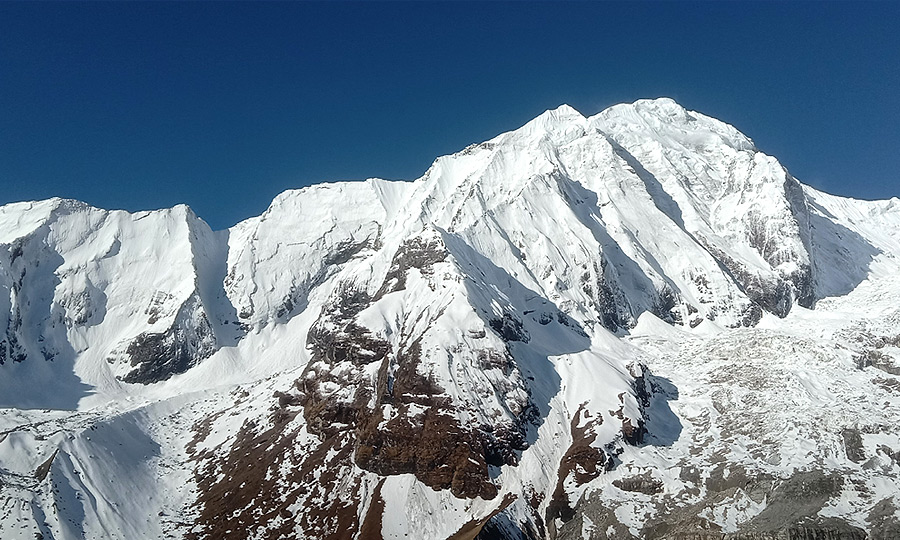
Tent Peak or Tharpu Chuli (5663m) is perhaps the most attractive and visually gratifying trekking peaks in the Himalaya. The summit is almost flat carrying a massive chunk of rock, ice and along snow ridge. Its location right in the Annapurna range makes it even more exciting. Many climbers opt for Tharpu Chuli not just of the challenge it presents but also for a variety of attractions it offers.
Because of low height as compared to other trekking peaks and its accessibility, Tent peak is considered one of the most popular and easiest trekking peaks to climb. Anyone who knows use of ice-axes, ropes and glacier walking will be enough to reach to the summit.
Summit of Tent Peak rewards the superb views of Annapurna Himalayan ranges including Annapurna I, II, III, IV, Gangapurna, Mt. Fishtail among others. The traditional settings of villages and the warm culture & hospitality of Gurung community will be an added bonus.
On your arrival at Kathmandu International Airport, you will be greeted with flower garlands/Khadas. Our representative will then take you to your hotel. If time prevails, you will visit office for paperwork.
Stay overnight at the hotel in Kathmandu.
Today, you will visit popular world heritage monuments in Kathmandu including Kathmandu Durbar Square, Boudhanath, Swoyambhunath, and Pashupatinath. Alternatively, you can also choose Bhakatapur and Patan sightseeing. By late afternoon, you will drive back to your hotel.
Stay overnight at a hotel in Kathmandu.
After early morning breakfast, you will be picked up from the hotel and taken to the tourist bus station. Drive from Kathmandu to Pokhara (914m.) takes about seven hours. The drive will take most of our morning time, leaving much of the afternoon to get a warm glimpse of Pokhara Valley and its beauty. If you choose to fly, you can reach Pokhara in 25 minutes. There are several flights from morning to afternoon available from Kathmandu to Pokhara.
Pokhara is the tourist's paradise with full of natural as well as cultural heritage sites such as lakes, caves, Buddhist monasteries and Hindu temples along with the magnificent views of Lamjung Himal, Annapurna, Dhaulagiri and many other mountain peaks.
Stay overnight at hotel in Pokhara.
From Phedi you begin your trek to Pothana (1900m), which is a small Gurung village surrounded by pine and rhododendron forests. You can see close up views of Lamjung and Annapurna Himal. The trail ascends all the way to Pothana through forests till you reach the village called Dhampus. It is a Gurung village with magnificent views of Annapurna ranges, Lamjung Himal and Manaslu.
Stay overnight at lodge.
While trekking from Pothana to Jhinudanda (1760m.) the trail ascends gently to Deurali and further to Bherikharka through forested path. You then follow a flat path till you arrive at Landruk village. The path you follow include terrace fields and numerous green hills till Landruk and this section is really exhilarating as you pass through many local villages rich in culture. From here the trail descends to Modi Khola (stream) and ascends gently all the way to Jhinudanda.
Stay overnight at lodge.
The trail is steep up through terraces from Jhinudanda to Chhomrong. Passing Chhomrong, the trail descends along a stone staircase and crosses the Chhomrong Khola on a wooden bridge, then climbs out of the side valley. High above the Modi Khola on its west bank, the trail passes through the tiny settlement of Bhanuwa in forests of bamboo and terrace fields and passing through a few small settlements. Climbing further through a rocky trail you reach three hotels at Sinuwa, at 2350m. We keep on climbing through rhododendron forests to Kuldi Ghar (2520m). This was once a location for British sheep breeding project. In winter, it's common to find snow anywhere from this point on. Descend a long, steep stone staircase into deep bamboo and rhododendron forests. It is then a short distance on a muddy trail to Bamboo Lodge (2340m.).
Stay overnight at lodge.
Trek from Bamboo to Deurali (3230m.)gently ascends through bamboo forests with varieties of rhododendron and oak trees. The first town you reach is Dovan (2630m.) where there are few lodges and camp sites. Now you pass through muddy trail which traverses high above the river. It takes approximately twenty minutes to reach Deurali.
Stay overnight at lodge.
The path follows through alpine forest. After a short trek, you begin to approach Machhapuchhare Base Camp. From here, you can see the panoramic views of several snow capped mountains.
Stay overnight at lodge.
Annapurna Base Camp is a vantage point to see the Himalayas at a 360 degree turn. Some of the impressive ones include Mount Hiunchuli (6441m.), Annapurna South (7229m.), Annapurna I (8091m.), Annapurna III (7555m.), Gangapurna (7454m.) and Machhapuchhare or Fish Tail (6997m.) etc.
Stay overnight at lodge.
You cross Annapurna glacier to follow the steep ascent trail all the way to Tent Peak Base Camp. On the way you can enjoy the panoramic views of Hiunchuli (6441m.), Annapurna South (7229m.), Annapurna I (8091m.), Fishtail Mountain, Barahashikhar Mountain and many others.
Stay overnight at camp.
The trail is a steep ascent all the way to High Camp. This day you can enjoy the panoramic views of Hiunchuli (6441m.), Annapurna South (7229m.), Annapurna I (8091m.), Fishtail Mountain, Barahashikhar Mountain and many others.
Stay overnight at camp.
Summit Tent peak (Tharpu peak) of 5663 meters, and descends back to Tent Peak Base Camp takes about 7 hours.
Stay overnight at camp.
The trail moves steep down until you reach Annapurna Glacier, and after crossing it you reach Annapurna Base Camp where you can stop for lunch. Today, you will further descend to Machhapuchhre Base Camp.
Stay overnight at lodge.
Descending down to Bamboo is very scenic.
Stay overnight at lodge
The trail goes steeply up to the Kuldi Ghar and now the trail is quite flat until you reach Sinuwa. The trek then gradually descends to the Chhomrong Khola and you have to follow stone staircase for almost an hour to reach Chhomrong. 1 hr further down will take you to Jhinu Danda. You can visit a natural hotspring in Modi Khola, which is 20 minutes hike from Jhinu Danda.
Stay overnight at lodge.
Ghandruk is one of the most popular Gurung villages in Annapurna region. You will drive from Ghandruk village to Pokhara via Nayapul (New Bridge). The first one and a half hour stretch from Ghadruk to Nayapul is over a graveled road and the next one and a half hours to Pokhara is along paved road.
Stay in hotel in Pokhara.
If you choose to fly back to Kathmandu, it takes about 25 minutes. There are several flights from Kathmandu to Pokhara from morning to afternoon.
Stay overnight at hotel in Kathmandu.
As per your flight schedule, our airport representative will transfer from your hotel to the airport for your final departure.
Yes, Tent Peak is considered an ideal introduction to Himalayan climbing for fit and adventurous trekkers. While some basic technical sections exist—especially near the summit—most of the climb involves glacier walking, moderate snow slopes, and use of fixed ropes. Prior climbing experience is helpful but not mandatory. With good fitness, mental endurance, and guidance from professional climbing staff, even first-time climbers can safely reach the summit.
Tent Peak is rated as a moderate-level climbing peak. The difficulty comes mainly from:
However, it doesn’t involve complex rock climbing or prolonged technical challenges. Most people with good trekking experience and basic ropework training can handle the climb with proper support.
The best seasons for climbing Tent Peak are:
Climbing is possible outside these months, but winter brings extreme cold, and the monsoon season (June–August) can make trails slippery and dangerous.
A typical Tent Peak climbing itinerary lasts about 17 to 20 days, depending on the starting point and acclimatization schedule. The itinerary includes:
Some people combine Tent Peak with Annapurna Base Camp trekking, adding a cultural and scenic trekking experience.
Yes, climbers must obtain several permits:
While it’s technically possible to climb Tent Peak independently, it’s strongly recommended to go with a licensed guide or agency. This ensures:
Guides are often trained in first aid and rescue, and they make the journey smoother and safer.
You need to be in good physical shape. The expedition involves:
Pre-trip training should include cardiovascular endurance, strength training, and hiking with a backpack. If you can trek to high altitudes like Everest Base Camp or Annapurna Base Camp, you’re likely fit enough for Tent Peak.
You’ll need both trekking and climbing gear, such as:
Many agencies provide group gear and allow personal technical gear rental in Kathmandu or Pokhara.
Yes, since the climb reaches nearly 5700 meters, altitude sickness is a possibility. Symptoms may include:
Proper acclimatization, hydration, and a gradual ascent are essential. Most itineraries include rest days and ascent protocols to minimize the risk. Guides carry first-aid kits and emergency medication, and oxygen is available if needed.
During the trek to Annapurna Base Camp, you’ll stay in local teahouses and lodges. These offer basic but comfortable accommodation and meals. Once at Base Camp and High Camp, accommodation shifts to tented camping. Your support team will handle:
On the trail, teahouses serve a mix of Nepali and Western dishes, including:
At Base Camp, your expedition cook will prepare nutritious, high-calorie meals to support your energy needs. Most agencies can accommodate vegetarian and other dietary preferences if notified in advance.
The summit of Tent Peak offers some of the most spectacular panoramic views in the Annapurna region. From the top, you can see:
The climb is worth it for the sunrise views alone, lighting up the amphitheater of snowy giants surrounding you.
Tent Peak is considered one of the safer climbing peaks in Nepal due to its accessibility, moderate elevation, and lower objective hazards (like avalanches or crevasses). However, risks still exist, such as:
Choosing a reputable agency, experienced guides, and being well-prepared all contribute to a safe and successful climb.
Yes! Tent Peak is often combined with:
Adventurous climbers sometimes pair it with nearby peaks like Hiunchuli or even go on to attempt more challenging summits after gaining confidence on Tent Peak. It’s a flexible adventure that can be tailored to different fitness and experience levels.
Nepal Environmental Treks & Expedition ensures you to provide a well planned itinerary for Tent Peak climbing. An experienced and highly professional climbing guide will be assigned to each climbing member. All necessary logistics will be taken care from our side. However, we expect to maintain good health and physical condition as well as well good mental preparation from your side.
Mountaineering Equipments
Crampons, Ice axe, Helmet, Harness, Lock and unlock Carabineers, Shovel, Climbing pack, Rope, Ski poles, Desender/abseil device, Jummer (Asender) , Tapes, Prusik Loops, Rappel device, Hand Warmer (if possible)
Clothing and Wears
Trekking shoes with spare laces, Mountaineering Boots, Plastic or leather for mountaineering boots, Gore-Tex pants, Long shorts, Insulated Parka, Jumper, Waterproof Jackets, Down Jacket, Fleece Vest, Wool cap, Neck Gaiter, Gloves, Climbing Socks, Thermal Underwear, Sandals, Snow Goggle
Essential Gears
Backpack, Duffle bag, Sleeping Bag, sleeping pad, Tents
Gadgets
Map, Compass, Camera, GPS, Two way radios, Binoculars, Head Lamp, Flashlight
Sun Protection Items
Sun glasses, sun scream, Lip balm
Medical
First aid Kit (Brufen / Ibuprofens, Antibiotic, Diamox, Paracetamol, Handy Plaster, Crack Bandage, Tincture Iodine, etc.)
Other Essentials
Energy Bars, Water bottle, Water Purification Tablets, Toiletries, Trekking poles, Pocket knife, raincoat, Satellite Phone, Altimeter
Nepal 18 Days
Nepal 27 Days
Nepal 21 Days
Nepal 17 Days
Nepal 19 Days
Nepal 21 Days
Nepal 33 Days
Nepal 20 Days
Nepal 26 Days
Nepal 23 Days
Nepal 13 Days
Nepal 22 Days
Nepal 16 Days