Chekigo Peak Climbing (6121m.)

Chekigo Peak Climbing (6121m.)

Overview And Highlights

Trip Facts

Trip Type

Lodge & Camping

Grade

Moderate

Altitude

6121 m.

Transportation

Public Bus/Jeep

Group Size

1 or more

Best Season

Spring and Autumn
Duration
17 Days
  • Best price guaranteed
  • Book now, pay later

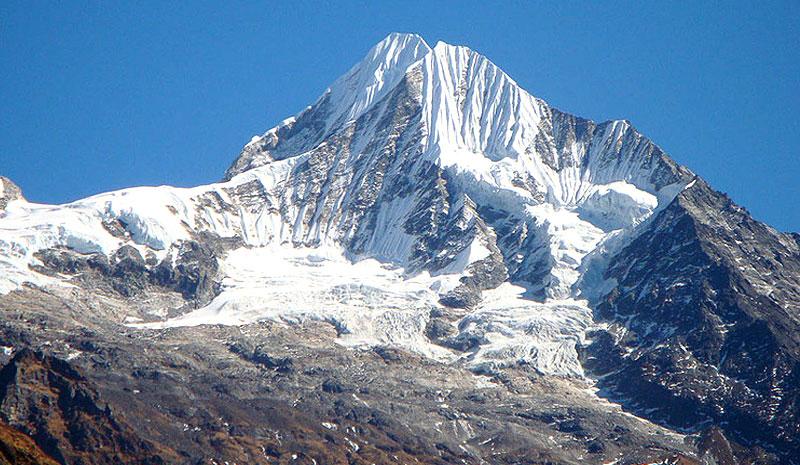
Chekigo Peak (6121m.), also called Mt. Chekijo, is one of the newly opened trekking peaks in Nepal. Located between Khumbu and Rolwaling Valley. The peak is surrounded by other popular peaks, such as Mt. Gaurishankar (7134m), Mt. Tengi Ragi Tau (6943m), Mt.Dragkar Go (6793m) and Mt. Bisphero Go Shar 6729m among others.  

As compared to other peaks, Chekigo is  is one of the least climbed trekking peaks in Nepal and hence journey to the peak takes you into off the beaten path. In terms of challenge, Mt. Chekigo offers double whammy for real adventure seekers.

Not only is Mt. Chekigo a strenuous climb but a part of challenge also involves crossing Tashi Labsta La pass (5755m), one of the highest passes in the Himalayas. The view from the pass offers outstanding panorama of all the afore mentioned Himalayas including Mt. Chekigo.

The push to the summit of Mt. Chekigo will be launched  from the base camp at 5400m. A minimum of two camps will be prepared before final leg to the summit. Climbers will have to negotiate through a bundle of snow, ice and rock. The time required to summit the Mt. Chekigo and return to the base camp is 9 days.  

Much of the trekking will be through Rolwaling Valley that  will offer a plethora of cultural and natural attractions. Prepare for some wild adventure into the pristine biodiversity and a land of unique hospitality.

Itinerary Expand All Close All

Food
Welcome Drink
Accomodation
Hotel
Elevation
1400

On your arrival at Kathmandu International Airport, you will be greeted with flower garlands/Khadas. Our representative will then take you to your hotel. If time prevails, you will visit office for paperwork.
Stay overnight at the hotel in Kathmandu.

Food
Breakfast
Accomodation
Hotel
Elevation
1400

Today, you will visit popular world heritage monuments in Kathmandu including Kathmandu Durbar Square, Boudhanath, Swoyambhunath, and Pashupatinath. Alternatively, you can also choose Bhakatapur and Patan sightseeing.  By late afternoon, you will drive back to your hotel.
Stay overnight at a hotel in Kathmandu.

Food
BLD
Accomodation
Camp/Lodge
Elevation
1660

Drive from Kathmandu (1350m.) to Shigati via Dolakha (1660m.)
Stay overnight at camp/lodge.

Food
Camp/Lodge/Home stay
Accomodation
Lodge
Elevation
1440

We trek through a normal flat land along the banks of the river and then pass through a rice terraced field. There are a few small village hamlets found on the way which are inhabited by different ethnic communities. You continue to cross jungles covered by orchid, a few rhododendron trees and wild vegetation. You next cross a suspension bridge to reach Jagat, a small town resided in by people from different cultures. You interact with the local folks to get an insight into the their life.
Stay overnight at camp/lodge/home stay.

Food
BLD
Accomodation
Camp/Lodge/Home stay
Elevation
2020

The first part of your trail follows normally flat path, then it ascends and descends through the jungle. Several places, you cross through suspension bridge. There are numerous villages on your way. You can find small teashops and local shops at some of the places. Steeply climb up to Simigaon, a village inhabited by Buddhist and few Hindus.
Stay overnight at camp/lodge/home stay.

Food
BLD
Accomodation
Camp/Lodge/Home stay
Elevation
3976

On the route you come across the Sherpa villages. The uphill trek is rich in different varieties of plants and Rhododendron trees. After the uphill trek you will now come across ascending and descending paths while enjoying the scenic beauty of the place.
Stay overnight at camp/lodge/home stay.

Food
Camp/Lodge/Home stay
Accomodation
Lodge
Elevation
3690

The trek now ascends uphill through different varieties of plants and Rhododendron trees. You trek over the suspension bridges over the deep gorges in a few places making the trek even more enchanting. You finally reach Beding, which is a big Sherpa village.
Stay overnight at camp/lodge/home stay.

Food
Camp/Lodge
Accomodation
Lodge
Elevation
3690

In order to meet proper acclimatization and give some rest to your body, don’t go further up from Beding today.
Stay overnight at camp/lodge.

Food
BLD
Accomodation
Camp

Trek from Beding to Chekigo Base Camp. Stay overnight at camp.

Food
BLD
Accomodation
Camp
Elevation
6121

Climbing period of Chekigo Peak (6121m). Stay overnight at camp.

Food
BLD
Accomodation
Camp/Lodge

Trek down to Beding from Base Camp. Stay overnight at camp/lodge.

Food
BLD
Accomodation
Camp/Lodge
Elevation
3976

The trek now descends downhill through varieties of plants and Rhododendron trees. You trek over suspension bridges stretching over deep gorges in a few areas.
Stay overnight at camp/lodge.

Food
BLD
Accomodation
Camp/Lodge

On the route you come across picturesque Sherpa villages. The downhill trek is rich in different varieties of plants and Rhododendron trees. After the downhill trek you will then come across ascending and descending paths while enjoying the scenic beauty of the place.
Stay overnight at camp/lodge.

Food
BLD
Accomodation
Camp/Lodge

The first part of your trail follows a normal flat path, and then it descends and ascends through the jungle. At several places, you backtrack across suspension bridges. There are numerous villages on your way.
Stay overnight at camp/lodge.

Food
BLD
Accomodation
Camp/Lodge

Crossing a suspension bridge, you trek through normal flat land along the side of the river. You backtrack through rice terrace fields. There are small villages on your way which are inhabited by mixed communities. At several points, you cross jungles covered by orchid, few rhododendron trees and wild vegetation. 
Stay overnight at camp/lodge.

Food
Breakfast & Lunch
Accomodation
Hotel
Elevation
140

After an early morning breakfast, you drive from Shigati to Kathmandu.
Stay overnight at hotel in Kathmandu.

Food
Breakfast

As per your flight schedule, our airport representative will transfer you from your hotel to the airport for your final departure.

What Is Included ?

a) Kathmandu

  • All airport pick-up and drop-off services by private vehicle
  • 3 night hotel accommodation with breakfast
  • One day city sightseeing with an English speaking tour guide and private vehicle
  • Farewell dinner in Kathmandu with live cultural performance at authentic Nepali restaurant on the last evening
  • Souvenirs (t-shirt, mug, pen, bag, etc.)


b) Trekking/Climbing

  • Chekigo peak climbing permit
  • Entry permit for Gaurishankar Conservation Area
  • Trekkers' Information Management system (TIMS) card
  • Entry permit for Sagarmatha National Park
  • Entry fee of local municipal government
  • Climbing guides (Sirdar) (one climbing guide for 2 climbers)
  • Equipments fee for the climbing guide/s
  • Camping crews (Cook, Sherpa, kitchen helper)
  • Porters (1 porter carries 25 kilograms of luggage)
  • All meals three times a day (breakfast, lunch & dinner)
  • Accommodation in tents
  • Required equipments: Tents, mattresses, sleeping bags, down jackets, duffle bags, cooking utensil and trekking poles
  • Cooking fuel
  • Camping charges
  • Land transportation:Kathmandu - Shigati – Kathmandu by regular public bus
    Note: If you wish to travel by private jeep, then it costs extra.
  • Insurance and equipments for the guides and porters
  • First aid kit
  • Tax, VAT and our service charge
  • Rescue assistance (In case of emergency, we will organize prompt and professional rescue services. To arrange timely evacuation/rescue by helicopter, you must be well insured from a reliable travel insurance company that covers both helicopter evacuation and medical treatment cost.)

What Is Excluded?

  • Personal nature expenses (Telephone calls, toiletries, battery recharge, hot shower, laundry, soft drinks, beers and any alcoholic beverages)
  • Travel insurance
  • Tips for involved staffs
  • Lunch and dinner in Kathmandu
  • Entrance fees while sightseeing in and around Kathmandu
  • Extra nights’ accommodation in Kathmandu (even in case of early arrival or late departure, early return from trekking due to any personal reason than the scheduled itinerary)

Chekigo Peak Climbing (6121m.) Altitude Profile

FAQs

Chekigo is considered moderately technical, more challenging than trekking peaks like Mera or Island, but not as extreme as full alpine climbs. The summit push usually involves:

  • Steep snow and ice slopes
  • Possible crevasse navigation
  • Use of fixed ropes
  • Glacier travel


You’ll need to be comfortable using crampons, ice axe, and rope systems. Prior mountaineering experience is highly recommended.

A typical Chekigo expedition takes 16 to 20 days, depending on the itinerary and acclimatization. This includes:

  • A drive to Shigati
  • Trekking through remote Sherpa villages
  • Acclimatization days
  • The actual climb
  • Return trek and travel back to Kathmandu


This is not just a climb—it’s a complete trekking and cultural experience through one of Nepal’s wildest regions.

Yes, some level of mountaineering experience is strongly recommended. You should be familiar with:

  • High-altitude trekking
  • Basic ropework and self-arrest techniques
  • Using mountaineering gear (crampons, harness, ice axe)
  • Glacier travel and climbing on snow/ice terrain


Chekigo isn’t the best choice for complete beginners, but it’s perfect for intermediate climbers or those who’ve done peaks like Lobuche East or Pisang Peak.

The best times to climb are:

  • Spring (April to early June)
  • Autumn (late September to early November)


These seasons offer stable weather, clear skies, and good snow conditions. Spring gives blooming landscapes and longer days, while autumn offers crisp visibility and cooler nights. Monsoon (June–August) and winter (December–February) are not recommended due to safety risks and harsh weather.

Your adventure typically starts with a jeep drive from Kathmandu to Shigati, followed by a trek through Rolwaling villages like Simigaun and Beding. You’ll pass through pristine forests, rivers, and glacier moraines before reaching Chekigo Base Camp. The trail is rugged and remote—don’t expect roads or luxury teahouses, but the natural beauty is unmatched.

Yes, several permits are required:

  • Chekigo Peak Climbing Permit from the Nepal Mountaineering Association (NMA)
  • Gaurishankar Conservation Area Permit (GCAP)
  • TIMS Card (Trekkers’ Information Management System)

Since Chekigo lies in a semi-restricted zone, all permits must be arranged through a registered trekking agency, and you must be accompanied by a licensed guide.

Trekking Portion: Expect basic teahouses or homestays in villages like Simigaun or Beding. Facilities are simple—shared rooms, local meals, and limited power.

Climbing Portion: You’ll be camping in tents from base camp onwards. A full expedition setup usually includes sleeping tents, dining tents, and a kitchen team to prepare hot meals even at high altitude.

This is true expedition-style travel, not a luxury tour.

Absolutely. Since you’ll be spending days above 4000 meters and summiting over 6200 meters, there’s a real risk of AMS (Acute Mountain Sickness). Good operators will plan acclimatization days, promote hydration, and monitor your health. You should know the symptoms (headache, dizziness, nausea) and be willing to descend if needed. Some climbers carry Diamox, but the best prevention is slow ascent and proper rest.

You should be in excellent physical condition. This means:

  • Ability to hike 6–8 hours a day with a backpack
  • Strong cardiovascular fitness
  • Endurance and strength, especially in the legs and core
  • Comfort with long days at high altitude


Training should start 2–3 months in advance, combining hiking, cardio, and mountaineering-specific strength workouts.

During the trekking portion, you’ll eat traditional Nepali trekking meals like dal bhat, noodles, rice, soups, and vegetables. Once at base camp and higher, your expedition team will prepare hot, high-energy meals including pasta, porridge, eggs, potatoes, and soup. Hot drinks like tea, coffee, and soups are frequent. Bringing personal snacks like energy bars, chocolate, and nuts is a good idea.

A typical full-service package costs between $3,000 to $4,500 USD, depending on:

  • Group size
  • Duration
  • What’s included (transport, meals, guides, porters, gear rental)
  • Level of support at base camp


Extras include tips, travel insurance, personal climbing gear, snacks, and optional gear purchases or rentals.
 

Chekigo offers true adventure, solitude, and discovery. It’s perfect for those who:

  • Want to avoid the crowds of Mera or Island Peak
  • Crave authentic Himalayan culture
  • Seek a technically interesting but achievable challenge
  • Love remote, scenic trekking routes with wild natural beauty


You won’t just be climbing a mountain—you’ll be exploring a rarely visited region of Nepal and gaining deep connection with the land, people, and your own inner strength.

Nepal Environmental Treks & Expedition ensures you to provide a well planned itinerary for Chekigo Peak climbing. An experienced and highly professional climbing guide will be assigned to each climbing member. All necessary logistics will be taken care from our side. However, we expect to maintain good health and physical condition as well as well good mental preparation from your side.

Additional Information

Mountaineering Equipments

Crampons, Ice axe, Helmet, Harness, Lock and unlock Carabineers, Shovel, Climbing pack, Rope, Ski poles, Desender/abseil device, Jummer  (Asender) , Tapes, Prusik Loops, Rappel device, Hand Warmer (if possible)

Clothing and Wears

Trekking shoes with spare laces, Mountaineering Boots, Plastic or leather for mountaineering boots, Gore-Tex pants, Long shorts, Insulated Parka, Jumper, Waterproof Jackets, Down Jacket, Fleece Vest, Wool cap, Neck Gaiter, Gloves, Climbing Socks, Thermal Underwear, Sandals, Snow Goggle

Essential Gears

Backpack, Duffle bag, Sleeping Bag, sleeping pad, Tents

Gadgets

Map, Compass, Camera, GPS, Two way radios, Binoculars, Head Lamp, Flashlight

Sun Protection Items

Sun glasses, sun scream, Lip balm

Medical

First aid Kit (Brufen / Ibuprofens, Antibiotic, Diamox, Paracetamol, Handy Plaster, Crack Bandage, Tincture Iodine, etc.)

Other Essentials

Energy Bars, Water bottle, Water Purification Tablets, Toiletries, Trekking poles, Pocket knife, raincoat, Satellite Phone, Altimeter

Duration
17 Days
  • Best price guaranteed
  • Book now, pay later
Talk to our experts
Support

Similar Trips

WE ARE MEMBER OF

  • Tourism Department
  • Trekking Agencies Association of Nepal
  • Nepal Mountaineering Association
  • Kathmandu Environmental Education Project
  • Himalayan Rescue Association, Nepal

ACCEPTABLE PAYMENT CARDS

  • VISA Card
  • Master Card
  • JCB
  • Maestro
  • American Express