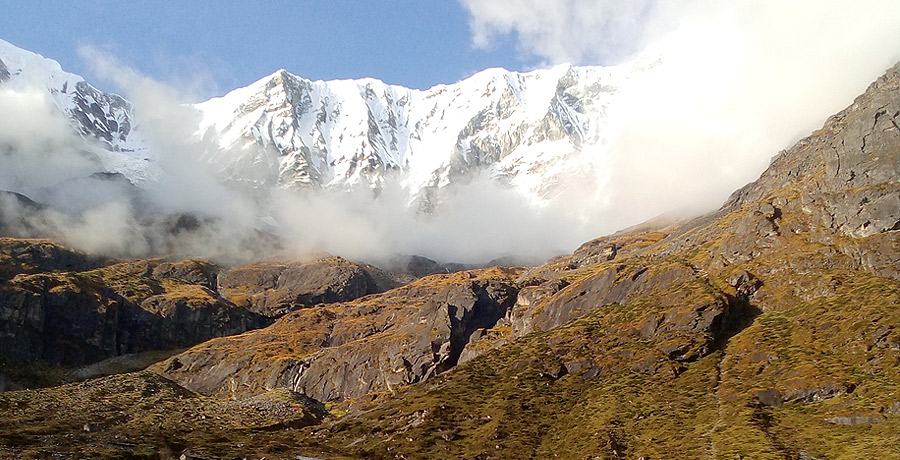
The Rolwaling - Tashi Lapcha Pass Trek is a remote and adventurous journey in the Nepal Himalayas that connects the secluded Rolwaling Valley with the famous Everest region via the high-altitude Tashi Lapcha Pass (5,755 meters). This trek offers a unique blend of untouched natural beauty, rich Sherpa culture, and dramatic alpine landscapes. Trekkers pass through traditional villages, dense forests, and high glacial valleys, with highlights including the stunning Tsho Rolpa Lake and panoramic views of peaks like Gauri Shankar and Melungtse.
Crossing the Tashi Lapcha Pass is both physically demanding and technically challenging, often requiring the use of mountaineering gear. Due to its difficulty and remoteness, the trek is best suited for experienced and well-acclimatized trekkers. It typically takes around 18 to 21 days to complete and requires special permits, including those for the Gaurishankar Conservation Area and sometimes a climbing permit. The trek offers an unforgettable experience for those seeking isolation, adventure, and a deep connection with the high Himalayas.
Arrival at Tribhuvan International Airport, Kathmandu
Upon your arrival at Tribhuvan International Airport, our office staff will greet you traditionally with flower garlands. You will then be transferred to your hotel. Stay overnight at the hotel in Kathmandu.
Free day in Kathmandu for trip preparation. Stay overnight at hotel in Kathmandu.
Drive from Kathmandu (1350m.) to Shigati via Dolakha (1660m.) Stay overnight at lodge.
Trek from Shigati to Jagat (1440m.) takes about seven hours. You will trek through a normal flat land along the banks of the river and then pass through a rice terraced field. There are a few small village hamlets found on the way which are inhabited by different ethnic communities. You continue to cross jungles covered by orchid, a few rhododendron trees and wild vegetation. You next cross a suspension bridge to reach Jagat, a small town resided in by people from different cultures. You interact with the local folks to get an insight into the hteir life. Stay overnight at lodge/home stay.
Trek from Jagat to Simi Gaon (2020m.) takes about seven and a half hours. The first part of your trail follows normally flat path, then it ascends and descends through the jungle. Several places, you cross through suspension bridge. There are numerous villages on your way. You can find small teashops and local shops at some of the places. Steeply climb up to Simigaon, a village inhabited by Buddhist and few Hindus. Stay overnight at lodge/home stay.
Trek from Simi Gaon to Daldung La (3976m.) takes about seven hours. On the route you come across the Sherpa villages. The uphill trek is rich in different varieties of plants and Rhododendron trees. After the uphill trek you will now come across ascending and descending paths while enjoying the scenic beauty of the place. Stay overnight at lodge/home stay.
Trek from Daldung La to Beding (3690m.) takes about seven and a half hours. The trek now ascends uphill through different varieties of plants and Rhododendron trees. You trek over the suspension bridges over the deep gorges in a few places making the trek even more enchanting. You finally reach Beding is a big Sherpa village. Stay overnight at lodge/home stay.
Trek from Beding to Na (4180m.) takes about four hours. On this day we explore the upper slopes of the valley for the Snow Partridge or a visit to the nearby glacier lake. The trail slightly ascends along the river bank. This is an open area with fresh air where we here the charming sounds of the flowing river. You can have panoramic views of the mountains as the trek moves forward. You will also come across a Sherpa village where you can interact with these famous climbers and learn about their culture. Stay overnight at camp.
Rest Day at Na. we will be able to witness the various views of mountains like Gauri Shanker, Menlung, Yalung and mountains of the Tibetan range. On this day you can hike Tso Rolpa Lake for excursion. You will be able to witness the beautiful Natural Lake filled with the chilling water of the glaciers.
Stay overnight at camp.
Trek from Na Gaon to Tso Rolpa Lake (4540m.). You will be trekking through the flat and gradually up path. You will be able to witness the beautiful Natural Lake filled with the chilling water of the glaciers. The views of Menlung and Tibetan Side Mountains add glory to your trek. Stay overnight at camp.
Trek Tso Rolpa to Trakarding Glacier (4800m.). Early morning you will walk through the glaciers throughout the day and will be able to experience the new enchanting beauties that would add extra dimensions into your trial. Stay overnight at camp.
Trek from Trakarding Glacier to Tashi Lapcha Pedi Camp (5755m.). The trail will still be ascending through some rock climbing and a gradual walk on the glacier. You will camp into Tashi Lapcha Pedi Camp today. Stay overnight at camp.
Climb from Tashi Lapcha Pedi to Tashi Lapcha Pass (5755m.) to Ngole (5130m.). You will climb up the Tashi Lapcha Pedi and cross the Tashi Lapcha Pass and trek continue to Ngole. The trial will completely be over the snow straight up and then steep down towards Ngole. Stay overnight at camp.
Trek from Ngole to Thyomgbo (4350m.) takes about five hours. Today you will be experiencing a bit easy glacier walking. The trail descends down towards Thyomgbo. Stay overnight at lodge.
Trek Thyomgbo to Thame (3820m.). Early morning you will trek to Thame. This trail gradually descends and you will have an added experience of easier trail and will be able to enjoy the natural beauty of the environment. Stay overnight at lodge.
Trek Thame to Namche Bazaar (3440m.). The trail descends gently for early one hour to Sanasa (3550m.). Now you have a glimpse of first really good views of the great peaks of the Khumbu including Mt Everest, Nuptse, Lhotse, Ama Dablam, Thamserku and Kusum Kangaru. Passing by several villages and numerous teashops, the trail descends steeply to a bridge over the river Dudh Koshi at Phunki Tenga (3250m.) Tyangboche is famous passing by several villages and numerous teashops; the trail ascends steeply to Sanasa where local Sherpa people sell the Tibetan goods. The way from Sanasa to Namche Bazaar has small ups and downs with view of forests, scenery and mountains. Stay overnight at lodge.
Trek from Namche Bazaar to Lukla (2886m) which takes about 6 hours. Your final day's trekking follows the Dudh Koshi back down to Lukla. Stay overnight at lodge.
Fly from Lukla to Kathmandu. You take an early morning flight back to Kathmandu. Stay overnight at hotel in Kathmandu.
Free day in Kathmandu for shopping and recreation. Stay overnight at hotel in Kathmandu.
As per your flight schedule, our airport representative will transfer you from your hotel to the airport for your final departure.
a) Kathmandu
b) Trekking
This is a strenuous and technical trek suited for experienced trekkers. The route involves long days of hiking at high altitudes, crossing glaciers, and navigating a technical pass where ropes, crampons, and sometimes ice axes are necessary. Proper acclimatization, excellent physical fitness, and some basic mountaineering knowledge are essential for a safe and successful trek.
The full trek typically takes 18 to 21 days, depending on your itinerary, acclimatization days, and weather conditions. Some trekkers also combine it with a longer Everest Base Camp trek or return via Lukla, which can influence the total duration.
The ideal seasons are spring (March to May) and autumn (mid-September to early November). These months offer stable weather, clearer skies, and relatively dry conditions, which are crucial for crossing the Tashi Lapcha Pass safely. Winter is too cold and snowbound, while the monsoon brings heavy rain and landslide risks.
Yes, you’ll need multiple permits:
While not legally mandatory in all sections, a licensed guide is highly recommended — and often required by trekking agencies — because the route is remote, poorly marked in places, and involves technical elements. A guide also ensures safety during the pass crossing and helps with navigation, logistics, and emergency situations.
Some of the major highlights include:
Yes, some basic mountaineering skills are helpful and sometimes essential. While you won’t be scaling technical peaks, crossing the Tashi Lapcha Pass involves walking on ice, snow, and sometimes steep sections that require fixed ropes. Familiarity with crampons, ice axes, and rope techniques will significantly improve your safety and confidence.
For most of the trek, you’ll find basic teahouses or homestays in villages like Simigaon, Beding, and Na. However, near the pass and glacier sections, you’ll likely need to camp for 2–3 nights, especially around Tashi Lapcha Base Camp. Trekking agencies provide tents, sleeping mats, and meals during these sections.
You’ll mostly get typical Nepali trekking meals, such as dal bhat (rice, lentils, and curry), noodles, soups, potatoes, eggs, and Tibetan bread. In remote areas, food variety can be limited, so bringing some snacks (energy bars, nuts, chocolate) is recommended. During the camping sections, your support team will cook meals for you.
The trek usually starts at Gongar or Simigaon, which are reachable by drive from Kathmandu (8–10 hours) via Charikot and Dolakha. Roads may be rough, especially after rain, so a 4WD vehicle is preferred.
The highest point is Tashi Lapcha Pass at 5,755 meters (18,881 feet). It’s a glaciated pass that often requires ropes and fixed lines. This section is also the most challenging in terms of altitude and terrain.
Yes, acute mountain sickness (AMS) is a serious concern due to the rapid ascent and high elevations. Proper acclimatization is crucial. It’s recommended to include rest/acclimatization days in places like Beding or Na and to ascend slowly. Know the signs of AMS and always listen to your body.
Technically, it’s possible — but highly discouraged. The route is remote, sparsely populated, and has limited infrastructure. In the high alpine zones, navigation is difficult and rescue is not easily available. Going with a guide and porter or joining a group significantly improves your safety and experience.
If you're looking for raw wilderness, solitude, and a serious adventure, the Rolwaling – Tashi Lapcha trek delivers in every way. It’s not crowded, not commercialized, and offers a genuine Himalayan experience. You’ll see majestic peaks, meet local people living traditional lifestyles, and challenge yourself in ways few treks can match. It’s perfect for those who’ve already done classic routes and are now seeking something wild and memorable.
Below is a list of equipment and clothing required for trekking. The necessity of these items depends on the type, altitude, timing and destination of trekking. Appropriate trekking gears are not only required for the comfort/pleasure of your trek but also to improve safety factor. Please have a look over these items in order to fully prepare and thoroughly enjoy the trekking.
General Items:
Daypack, Rucksack, Sleeping bag, Duffel bag, Walking Poles, walking boots, sandals, Toiletries (Soaps, Toilet papers, Sanitizers, toothpaste, tooth brush, etc.)
Clothing Items:
Thermal underwear, Down jacket, Shorts, Trekking trousers, Towels, Woolen gloves, Gaiters, Fleece jacket or Pullover, Wind/water proof jacket, Raincoat, Warm socks, buff
Sun-worn Items:
Sun hat, Sunglasses, Snow goggles, Sunscreen, Lip balm
Gadgets:
Headlamp, Flash light, Binoculars, Cameras (chargers and batteries),
Liquid/Snacks:
Water bottle/bladder, Water purification Iodine tablets, Energy bars and snacks
Medical Essentials:
First Aid Kit
Optional:
Altimeter, Compass, Binoculars, Books/magazines, GPS, Pocket knife, Candles (for lodges), Notebook with pencil/pen, etc
Additional items for camping trek:
Tent, Stove and fuel, Utensils for cooking, eating and drinking, sleeping mattresses
Note: We can also provide sleeping bag, down jacket, duffel bag, walking poles, and First Aid Kit in case if you don’t have one. These items are inclusive of total package price.
Nepal , Wilderness Trek 26 Days
Nepal , Wilderness Trek 23 Days