
Indra Jatra, also known as Yenya Punhi, is one of the most spectacular and culturally significant festivals celebrated in Kathmandu, Nepal. This vibrant Newar festival brings the historic streets of Kathmandu alive with colorful chariot processions, traditional masked dances, ancient rituals, music, oil lamps, and the appearance of the Living Goddess Kumari.
Celebrated for eight days in September, Indra Jatra marks the beginning of Nepal's autumn festival season. The main celebrations take place around Kathmandu Durbar Square, Basantapur, Indra Chowk, and the old city areas of Kathmandu, where centuries-old traditions continue to be practiced by local communities.
History and Legend of Indra Jatra
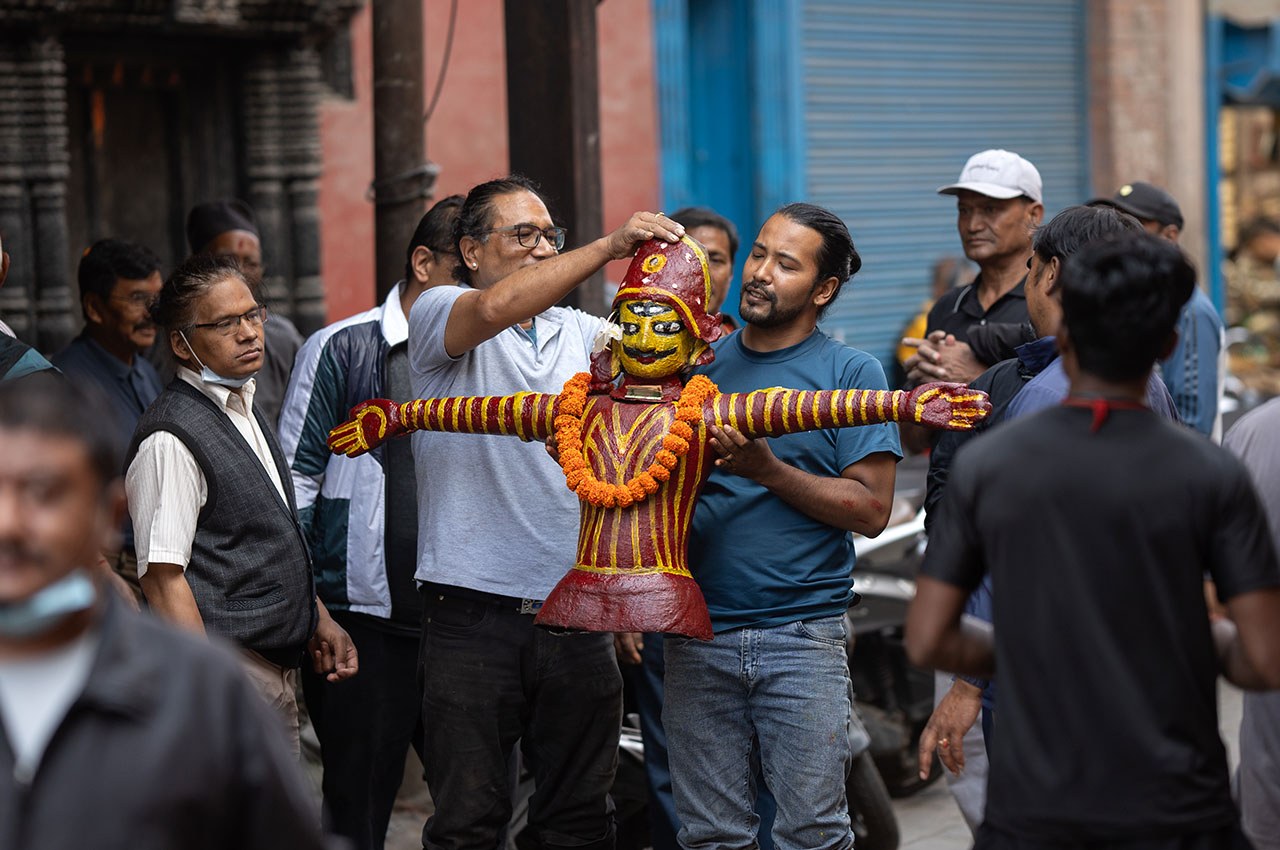
The festival is traditionally associated with Indra, the Hindu god of rain and the king of heaven. According to one popular legend, Indra descended to Earth in human form in search of a special herb. His presence and the events surrounding his visit became part of the traditions commemorated during Indra Jatra.
Indra Jatra also has deep connections with the history and traditions of the Kathmandu Valley's Newar communities. Some historical traditions associate the festival with the ancient city of Kathmandu and the reign of King Gunakamadeva, while particular Kumari-related practices were further institutionalized during the Malla period.
Over generations, the festival has developed into a remarkable combination of religious ceremonies, mythology, traditional art, music, dance, and community participation.
The Yosin or Indra Dhwaj Pole
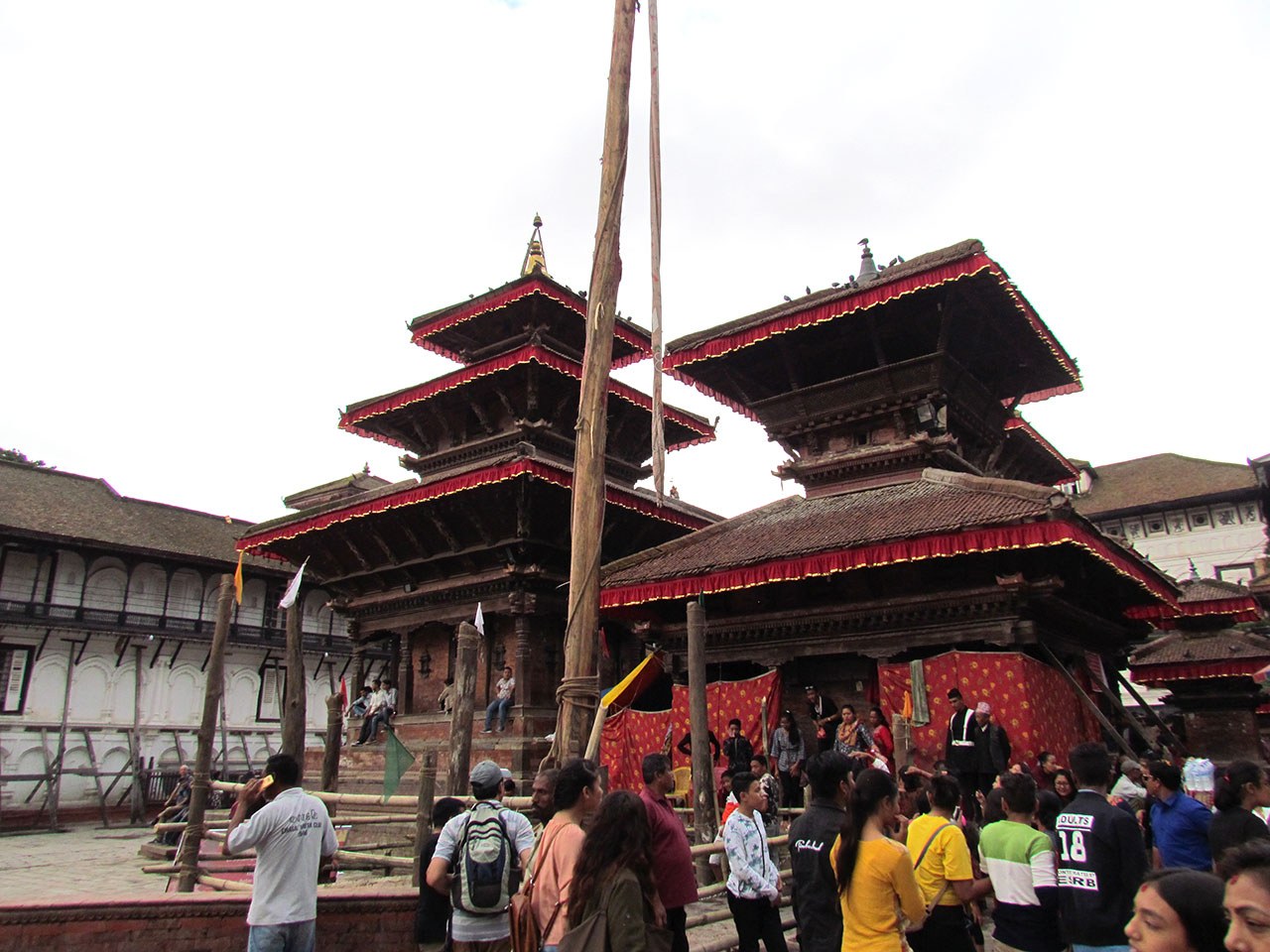
One of the first major events of Indra Jatra is the erection of the Yosin (lingam) pole, traditionally made from a pine tree, at Basantapur in front of the old Hanuman Dhoka Palace. The raising of the pole formally signals the beginning of the major festival celebrations.
The ceremonial pole carries Indra's flag and becomes an important focus of worship throughout the festival. At the conclusion of Indra Jatra, the pole is lowered through another traditional religious ceremony, marking the end of the festival.
Kumari Chariot Procession
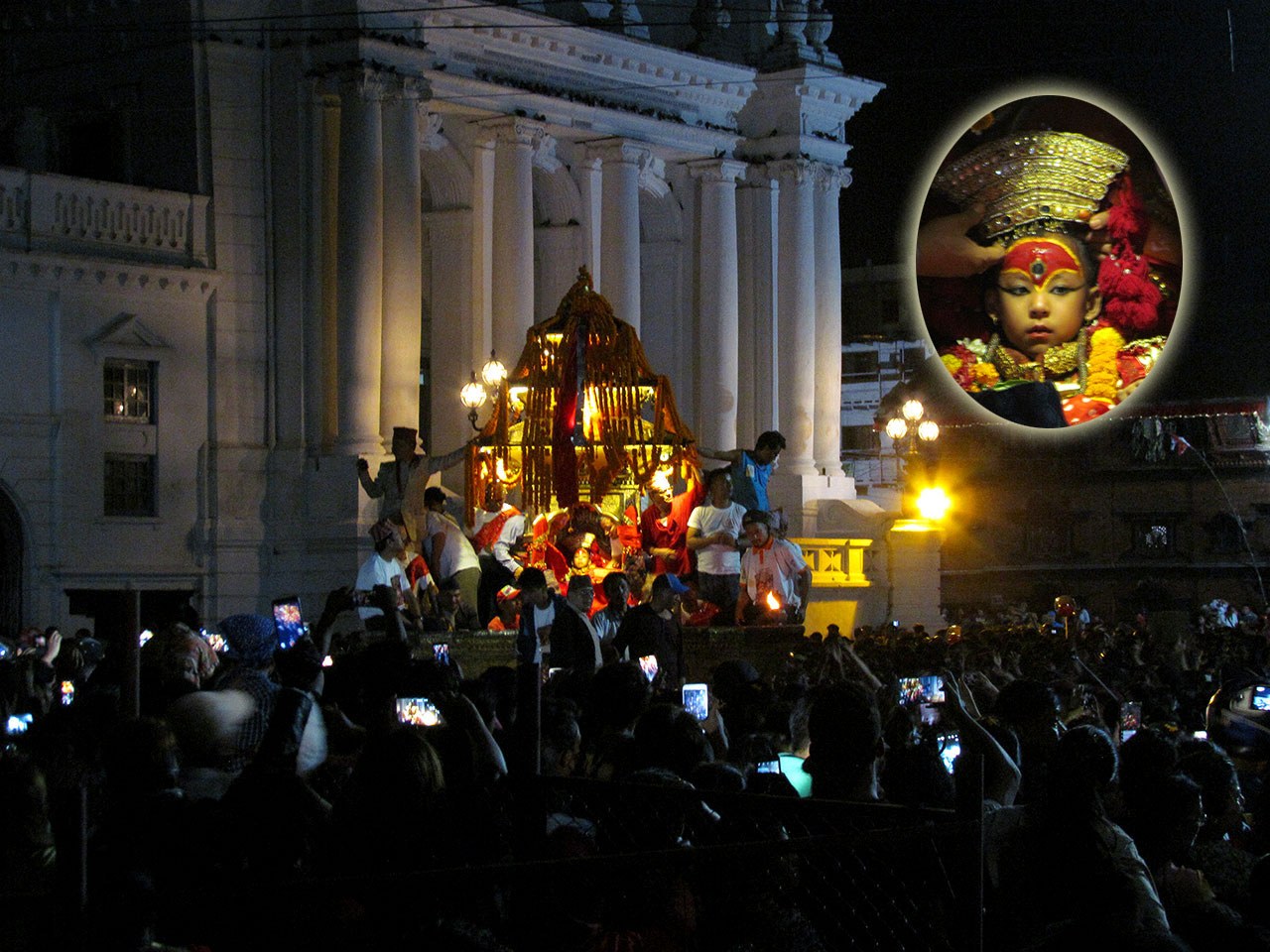
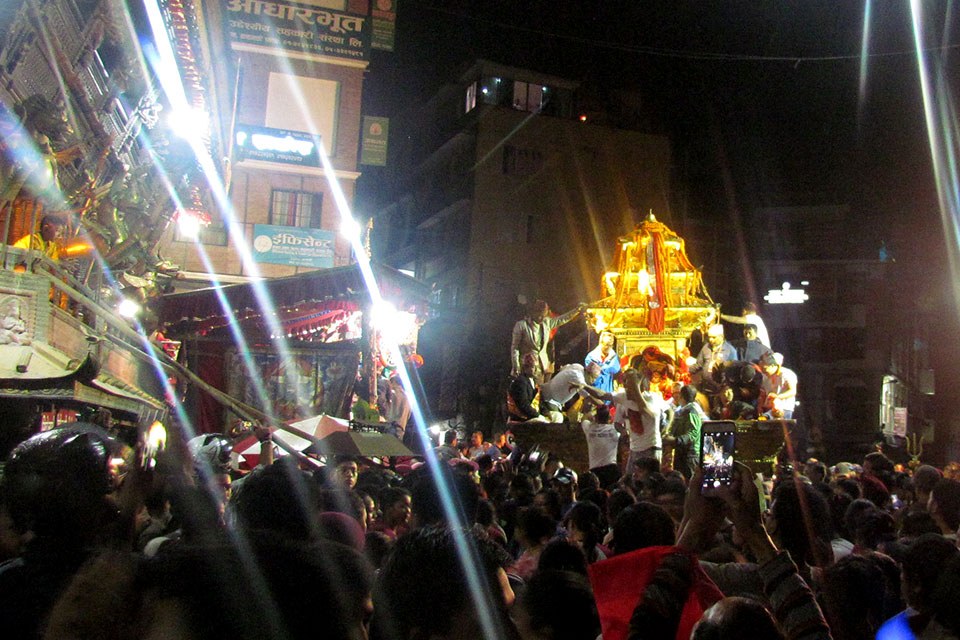
The Kumari chariot procession is one of the most anticipated highlights of Indra Jatra. The Living Goddess Kumari is carried through the historic streets of Kathmandu in a specially constructed chariot, accompanied by chariots representing Ganesh and Bhairav.
Large crowds gather around Basantapur and along the traditional procession routes to receive blessings and witness this centuries-old cultural ceremony. The narrow streets, historic buildings, temples, traditional music, and thousands of spectators create a unique atmosphere that cannot easily be experienced elsewhere.
The Kumari tradition itself is deeply connected with Kathmandu's Newar cultural heritage. The famous Kumari Ghar at Basantapur is the traditional residence of the Living Goddess and is located within the Kathmandu Durbar Square area.
Lakhey Dance and Traditional Performances
Another major attraction of Indra Jatra is the energetic Lakhey dance. Lakhey dancers wear distinctive masks and costumes and perform traditional dances accompanied by powerful drums and other musical instruments.
The appearance of Lakhey and other traditional performers transforms the streets of old Kathmandu into an open-air cultural stage. These performances are not simply entertainment; they are part of the religious and cultural traditions passed from one generation to another.
The festival also features various traditional dances, musical performances, religious enactments, and community rituals.
Akash Bhairav and Swet Bhairav
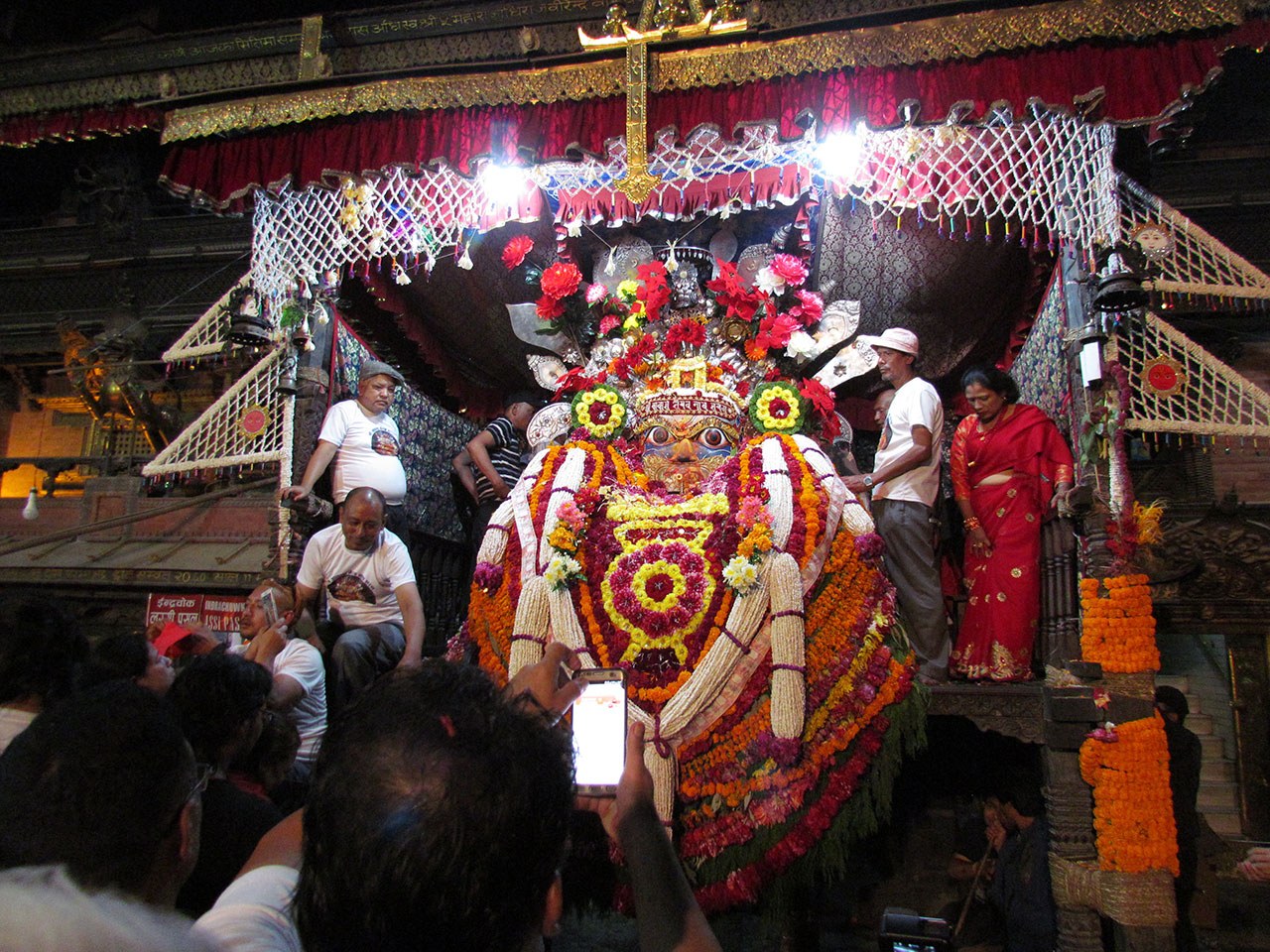
Indra Jatra provides an opportunity to observe several important religious traditions associated with Kathmandu's historic temples and deities.
The large image of Akash Bhairav is displayed publicly at Indra Chowk during the festival. Similarly, Swet Bhairav, located in the Kathmandu Durbar Square area, is traditionally opened to the public during Indra Jatra.
These traditions add an important religious dimension to the festival and attract devotees as well as visitors interested in Nepal's cultural heritage.
A Festival of Community and Living Heritage
Indra Jatra is much more than a religious celebration. It is a living expression of the Kathmandu Valley's history, art, architecture, music, mythology, and community traditions.
Families, local cultural groups, traditional organizations, musicians, dancers, artisans, and devotees all contribute to keeping the festival alive. The streets around the old city become gathering places where generations come together to participate in ceremonies and share their cultural heritage.
In recent years, Kathmandu's local authorities and cultural organizations have continued working to preserve and manage the traditional character of the festival while ensuring that large public celebrations can take place safely and respectfully.
When Is Indra Jatra Celebrated?
Indra Jatra follows the lunar calendar, so its dates change each year. It generally falls in August or September, around the time of the full moon in the month of Bhadra.
The festival traditionally lasts eight days, with different rituals, processions, dances, and religious activities taking place throughout the period. Visitors should check the official festival calendar for the exact dates before planning a trip to Kathmandu.
Experiencing Indra Jatra as a Visitor
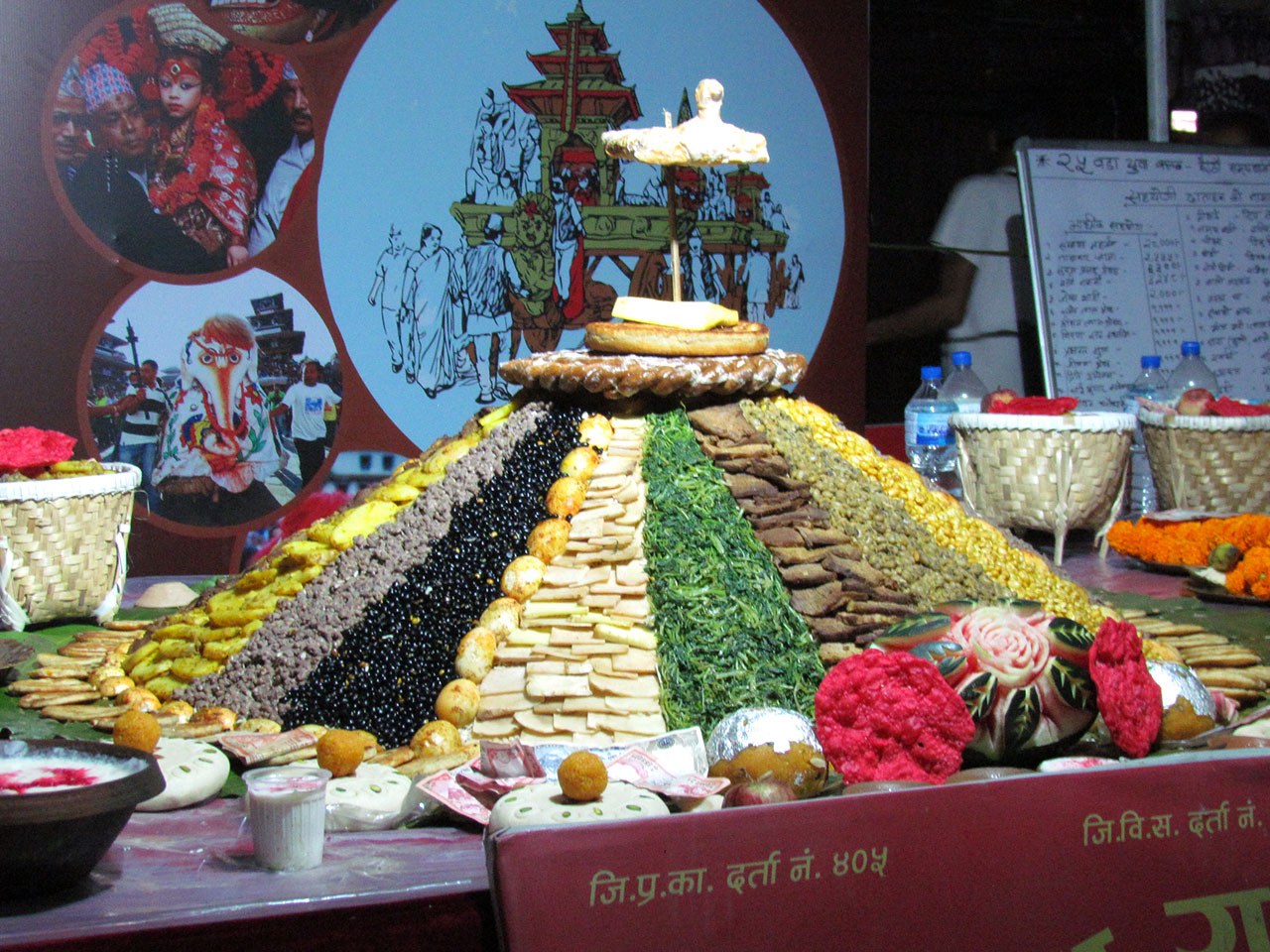
For travelers, Indra Jatra offers a wonderful opportunity to experience authentic Kathmandu culture beyond the city's famous monuments and temples.
Visitors can explore Kathmandu Durbar Square, Basantapur, Indra Chowk, Asan, and the surrounding old-city streets during the festival. The best experience comes from observing the ceremonies respectfully, allowing space for religious processions, and following local guidance when visiting crowded areas.
Photography is popular during the festival, but visitors should remember that Indra Jatra is primarily a religious and cultural celebration. Asking permission before photographing people participating in private rituals is a thoughtful way to respect local customs.
Why Visit Nepal During Indra Jatra?
If you are interested in Nepalese culture, Newar heritage, traditional festivals, photography, architecture, religion, and history, Indra Jatra provides an extraordinary cultural experience.
The combination of ancient temples, decorated chariots, masked dancers, traditional music, oil lamps, historic palaces, and vibrant crowds creates a unique atmosphere in the heart of Kathmandu. The festival also offers travelers a chance to see how Nepal's intangible cultural heritage continues to be practiced within a modern city.
Indra Jatra – A Celebration of Nepal's Cultural Heritage
Indra Jatra represents the extraordinary cultural diversity and living traditions of Nepal. From the raising of the Indra Dhwaj pole to the spectacular Kumari chariot procession and the lively Lakhey dances, every part of the festival reflects a connection between mythology, religion, history, art, and community life.
For anyone traveling to Kathmandu during the festival season, Indra Jatra is an opportunity to experience one of Nepal's most fascinating living cultural traditions. It is a celebration that connects the present with centuries of Kathmandu Valley history and demonstrates why Nepal remains such a remarkable destination for cultural and heritage tourism.
Explore Nepal with Nepal Environmental Treks & Expedition
Nepal Environmental Treks & Expedition (P.) Ltd. offers cultural tours, sightseeing programs, trekking, and adventure experiences throughout Nepal. Travelers visiting Kathmandu during Indra Jatra can combine the festival with visits to UNESCO World Heritage Sites, traditional Newar towns, Himalayan destinations, and other cultural attractions across Nepal.
Experience the colors, traditions, spirituality, and living heritage of Nepal with a journey designed around your interests.