

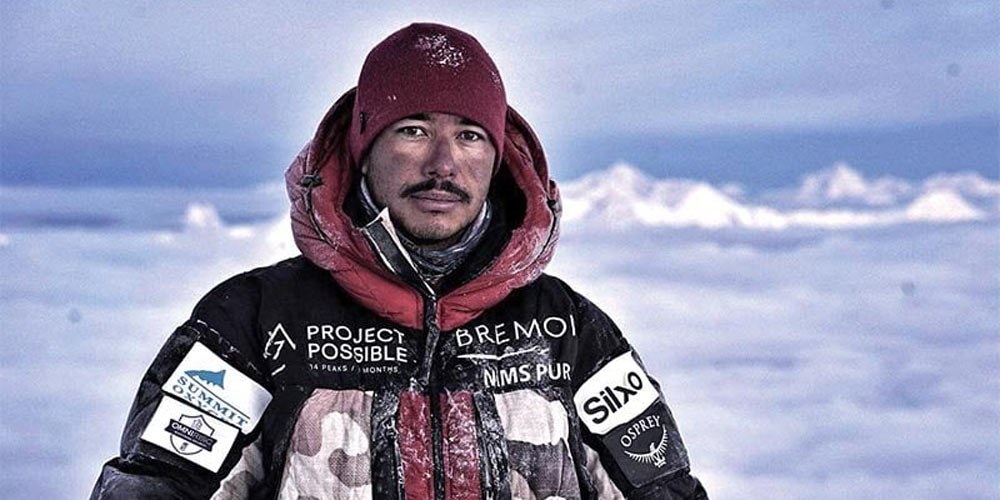
Nepal-born mountaineering legend Nims Dai (Nims Purja) one of the most celebrated high-altitude climbers of his generation, has died in a devastating avalanche on Broad Peak in Pakistan while pursuing another historic milestone in his extraordinary mountaineering career. He was 43.
Purja was leading an expedition on Broad Peak, the 8,051-metre mountain in Pakistan’s Karakoram range, as part of his ambitious attempt to become the first person to climb all 14 of the world’s 8,000-metre peaks twice without supplemental oxygen. The expedition ended tragically when an avalanche swept ten climbers down the mountain on July 30, 2026.
A Final Expedition Toward Another World Record
Broad Peak was reportedly a late addition to Purja’s expedition plans. Before beginning the climb, he shared a message asking the mountain only for “safe passage up and back down.” A successful ascent would have brought him one mountain closer to becoming the first mountaineer to complete a second oxygen-free ascent of all 14 eight-thousanders.
The goal reflected the relentless ambition that had defined Purja's career. Rather than simply repeating his previous achievements, he continued to push toward increasingly demanding milestones in high-altitude mountaineering.
On July 30, an avalanche struck the mountain at around 9 a.m. local time, sweeping ten climbers down a steep section of the route. Search and rescue teams worked under extremely difficult weather and terrain conditions, but there were ultimately no survivors from the expedition.
From Nepal to the World's Highest Mountains
Nirmal Purja rose to international fame in 2019 through Project Possible, when he climbed all 14 of the world's 8,000-metre peaks in just six months and six days, completing an achievement that had previously taken climbers years to accomplish. His extraordinary journey was later featured in the Netflix documentary 14 Peaks: Nothing Is Impossible.
His achievements went far beyond speed records. In January 2021, Purja was part of the historic all-Nepali team that became the first group to summit K2 in winter, accomplishing one of mountaineering's most difficult and long-standing objectives.
His background was equally remarkable. Before becoming a global mountaineering star, Purja served in the British military, including the elite Special Boat Service. His military discipline, determination and ability to operate in extreme environments became central elements of his mountaineering career.
More Than Records
For many climbers and admirers, Nims Dai's legacy cannot be measured only by the number of summits he achieved.
Throughout his career, Purja was also known for taking part in high-altitude rescues. He helped rescue climbers in serious difficulty on the world's highest mountains, at times putting his own safety at risk. His philosophy was that mountaineering should not be driven solely by personal achievement, but also by responsibility toward fellow climbers.
His success also helped place Nepali mountaineers more prominently on the international stage. Tributes following his death described him as an inspiration to a new generation of climbers and credited him with helping demonstrate the extraordinary ability of Nepali mountaineering professionals.
A Tragic End on Broad Peak
Purja's death has sent shockwaves through Nepal and the international mountaineering community. Fellow climbers, public figures and leaders have paid tribute to a man whose career repeatedly challenged perceptions of what was possible in the world's highest mountains.
The Broad Peak tragedy also serves as a stark reminder that even the world's most experienced climbers remain vulnerable to the unpredictable dangers of the high Himalaya and Karakoram. Avalanches, extreme weather, unstable snow and altitude can turn a planned ascent into a life-threatening situation within moments.
For Nims Dai, the mountain that became the setting for his final expedition was also part of a dream to make mountaineering history once again.
He did not complete that final record
But his extraordinary journey—from Nepal to the summit of all 14 eight-thousanders in record time, to the first winter ascent of K2 with a Nepali team, and ultimately to his final climb on Broad Peak—has already secured his place in the history of Himalayan mountaineering.
Nims Dai may have left the mountains, but his legacy will continue to inspire climbers around the world to dream bigger, climb higher and challenge the limits of what seems possible.